

Dear Member,
By means of an introduction my name is Sammy and I am the new HAC Flight Safety Officer having recently taken over from Carlos. The new Deputy Flight Safety Officer is Shane. This is the first of our new HAC Quarterly Flight Safety Digest, in which we aim to keep you updated on all Flight Safety related matters at HAC, as well as disseminate any findings we make from some of the excellent reports we receive.
The quality of reports we have received in the past 3 months since taking the seat have been first-rate, so thank you! Our ability to stay safe in the air is only as good as our understanding of what can go wrong, so please keep the reports coming and we’ll continue to disseminate any findings. In each digest Shane and myself will aim to offer some top tips on staying safe, all based on the occurrences that have occurred on HAC in the past quarter.
Occurrences Snap Shot Jun-Sep 22
- Loss of power on climb out
- ‘DANGER! DANGER! TRAFFIC!’ SkyDemon call on climb out
- Positioning for the wrong runway
- Higher than expected oil in engine bay
Click on the boxes below to see the thoughts from Sammy and Shane on each occurrence or click on the button below to download your copy.
Loss of power on climb out
A loss of power or lower than expected RPM at any stage in flight can be daunting, but no more so than on climb out! During initial training EFATO drills become part of the expected patter of any syllabus trip, with almost an anticipation that our instructor is going to chop the throttle at any point in the climb out run. But are your drills as slick now as they were then?
During a recent circuit session, a student and instructor noted poor climb performance on each circuit. The aircraft only achieved 250-300 ft/min and passed Aylesbury reservoir at approximately 400ft AAL. For comparison, an aircraft of the same type departed at the same time achieving 600 ft/min and >700ft AAL at the reservoir. On the third circuit passing 650ft AAL the engine RPM decreased noticeably by around 200-300 RPM. The crew confirmed the throttle was fully forward and decided to perform a close-in circuit to land.
First and foremost, the crew should be commended for their excellent awareness of the expected climb performance of their aeroplane, as this can often be a first indicator of engine trouble. In addition, noting your usual height at different points in the visual circuit also aids in the detection of the abnormal. Finally, the crew took the appropriate action by deciding to land. This example brilliantly highlights the importance of always pre-briefing your EFATO (Engine Failure On Take Off) plan based on the runway in use and environmentals of the day (think wind!). Given this example wasn’t strictly speaking an EFATO, you might want to consider ‘armchair flying’ loss of power up at different points in the visual circuit. For example, what would you do if your RPM began decaying during your upwind turn?
‘DANGER! DANGER! TRAFFIC!' SkyDemon call on climb out
During a recent solo flight a pilot received a ‘DANGER! DANGER! TRAFFIC!’ warning on their SkyDemon unit during initial climb out. The pilot was unable to sight any confliction, and the warning was in fact prompted by an erroneous transponder on the ground. The pilot in their excellent report raised a concern that some pilots may become distracted from flying the aeroplane on receipt of such a warning, and when low and slow on climb out risk stalling the aeroplane. We couldn’t agree more!
Remember, the priority on receipt of any warning or caution is to fly the aeroplane. Aviate, Navigate, Communicate (A, N, C) is a useful pneumonic. In relation to this specific example, if you receive a traffic warning fly the aeroplane first and foremost, a risk of stall in the climb out is probably higher than MAC. Fly the aeroplane, conduct good look out, if you see a confliction, resolve it, else, fly known profiles (it’s safer to be predictable!)
Positioning for the wrong runway
Following a recent landaway sortie, a pilot terminated the LARS service they were with and contacted Halton Radio for airfield information. The active runway (20RH) and QFE was passed, but the pilot positioned for a left-base join on 02 as opposed to a right-base join for 20. When the pilot called left base to land on runway 20, the call was queried by Halton Radio to which the pilot immediately recognised their mistake, and repositioned downwind for 20RH.
Sometimes these things just happen, especially following a busy sortie, however there some things you can do in the cockpit to make them less likely! It is customary to give a departure brief before we go flying which normally includes the runway in use, EFATO options, surface wind, frequencies etc… You might want to consider an arrivals brief too.
Similar to a departure brief, it should include at a minimum the runway in use (and subsequent circuit pattern), joining procedures, local weather and reported traffic. We would suggest conducting this immediately post the receipt of airfield information. Fundamentally, the more you can do to help build a mental model of what you’re about to do, the less likely unexpected outcomes are to occur!
Recommended Reading
Every quarter we will look to include links to articles or webpages with advice from the wider aviation community on topics that are relevant to the occurrences we’ve received at HAC, as well as any important documents that may have been recently published.
FAA Advanced Preflight After Maintenance Leaflet – An excellent article on the how to conduct enhanced preflight checks following aircraft maintenance. This is particularly relevant following some recent occurrences involving HAC aircraft returned from maintenance.
CHIRP General Aviation Feedback Aug 22 – CHIRP’s GA feedback for Aug 22 featuring a very good article on Threats & Errors.
The Airworthiness Code – And finally for those that haven’t seen yet, the CAA have recently ‘The Airworthiness Code’, a maintenance guide for Light Aircraft.
Reporting
And finally a brief refresher on how best to report occurrences at HAC!
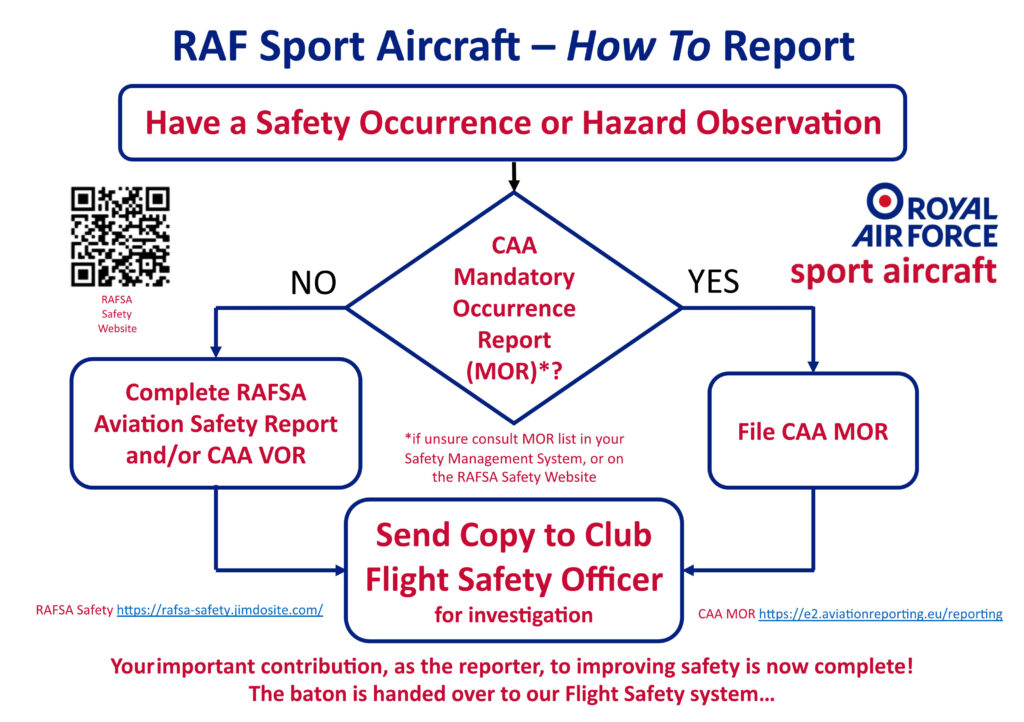
As mentioned previously this is our first HAC Quarterly Flight Safety Digest! We hope you’ve enjoyed the read and would gladly take any feedback on how best to improve it. Please send any feedback you may have to safety@haltonaeroclub.co.uk
Stay safe!
Sammy & Shane