Halton Aero Club 100th Anniversary Flying Exped 2025
By Perry Harris
No matter how many times we did the performance calculations, it seemed that G-EDGA, the club Piper Warrior we had landed into the 800m dry and bumpy grass runway at Prague’s Letnany airfield, wasn’t going to make it out. Once we realised that with the 38-degree temperatures and a density altitude reading of over 3,500ft, that even taking the luggage out wasn’t going to help, we desperately needed another plan.
This was Wednesday, just beyond mid-point on the seven-day HAC 2025 European Exped, named Pranie Skarpet (Polish for Washing Socks) in memory of a much missed member of the Club and regular Exped participant, Jon Kumela, of Polish descent, who had a decidedly unusual way of washing his socks en-route (ask a member for details!). We had already covered 882 of the 1,590 planned nautical miles, over six legs via Calais in France, Osnabrück, Luebeck and Strausberg in Germany, Lubin in Poland and now we were in Prague in the Czech Republic, with four return legs remaining to Bamberg and Koblenz in Southern Germany and Albert-Bray in Northern France.
The Exped is a culmination of intense planning that starts in February, where following a call for potential participants, there is an initial meeting to finalise the destination and discuss the general route. Different aircraft speeds and endurance may dictate shorter legs, but the target is always to arrive at the same overnight destination. It is truly a team effort with everybody in the team having a role, be it ordering the required charts, organising Hotels, searching out good restaurants or delivering Safety or Met Briefings to the rest of the team.
This annual event, which represents the pinnacle of post PPL flying for club members is what really marks the HAC as the one of the best flying clubs in the UK. The planning detail, attention to safety, risk management and experienced leadership providing members a safe but challenging experience to take their flying to the next level.
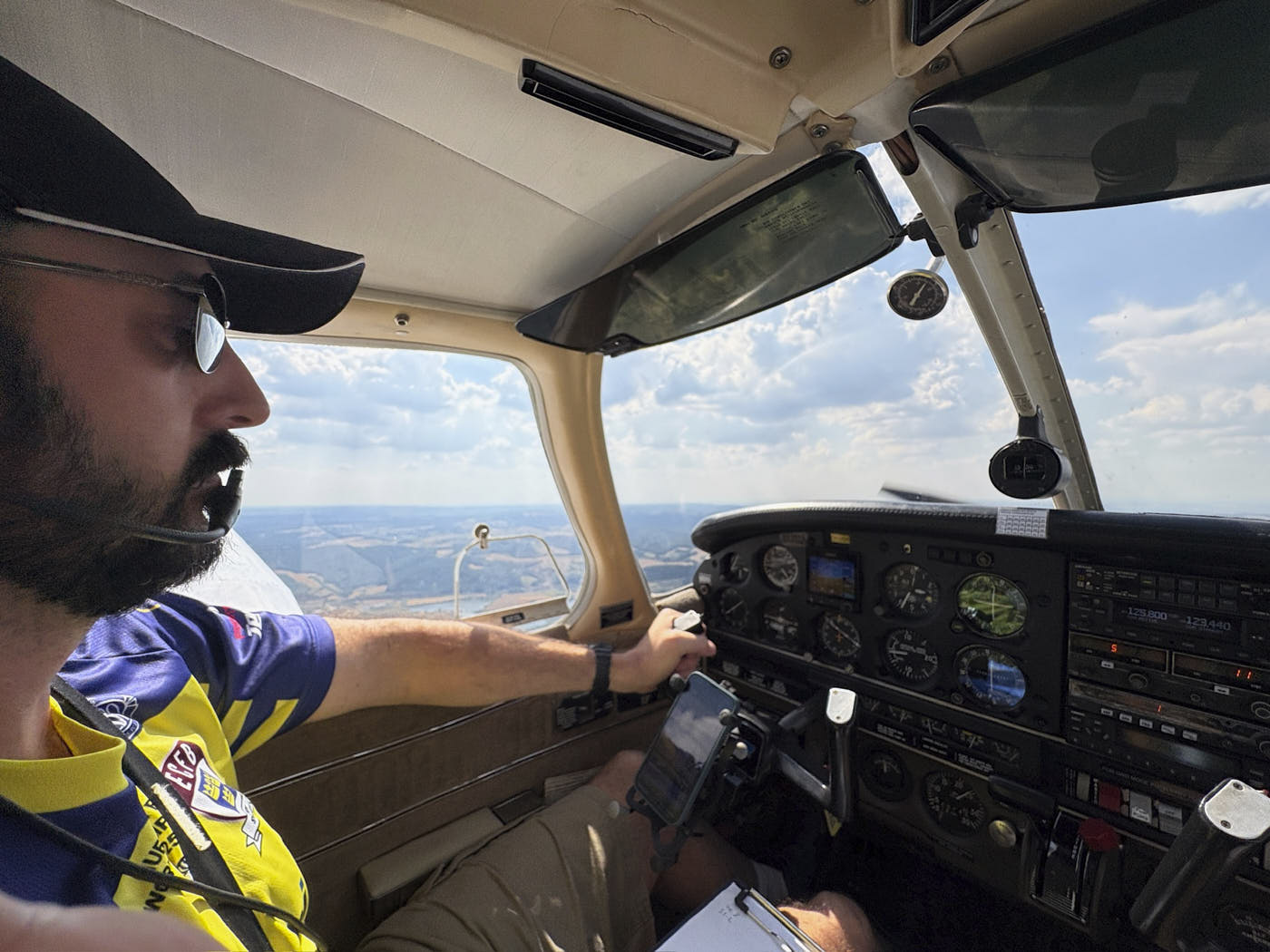

So who and what took part? Both the club PA28’s, which were the slowest aircraft on the tour, as the members who brought their own aircraft (the privateers!) arrived with plenty of horsepower. Mark (Manners) Manwaring in his custom built RV7, Graham Bartlett’s Cirrus SR22 Turbo, Pete Larkins Cessna 182 and Artem Grebinnyk’s brand new diesel powered Tecnam P2010.
Our initial leg to Calais to clear European customs was delayed until lunchtime while we waited for low cloud to lift to the minimum 1500ft for Halton and for the weather to clear over the Channel. As we were making a water crossing, Mark Manwaring had delivered a ditching safety briefing the previous evening. These briefings and risk assessments are a key part of the preparation and execution of the Exped. Every day we follow the standard Halton out & in-brief process, prompted by handy printed cards kept with our knee pads. Additionally, members are nominated to deliver a prescribed Emergency Of the Day (EOD) to the team as part of the daily briefing. This covers the prevention and dealing with things such as a alternator failure, door/hatch opening in flight or rough running engine (more on that later!).
Once Customs was cleared at Calais, aircraft and pilots re-fuelled, we were off to Osnabrück in Northern Germany through Belgium & Holland, and what on paper would be the most crowded and complicated airspace of the whole trip. The reality was that a lot of Military TRA’s were inactive as it was the weekend and that flying low level across the Low Countries was a pleasant experience.
Following a scenic approach into Osnabrück and a post beer landing for some, we had taxis arranged to take us to our hotel in time for a quick shower and change of clothing ready for the Daily Debrief. Generally held in the Hotel before dinner, the Daily Debrief follows a prescribed agenda starting with a review of the day, any flight safety occurrences, lessons identified and then an overview of the following day.

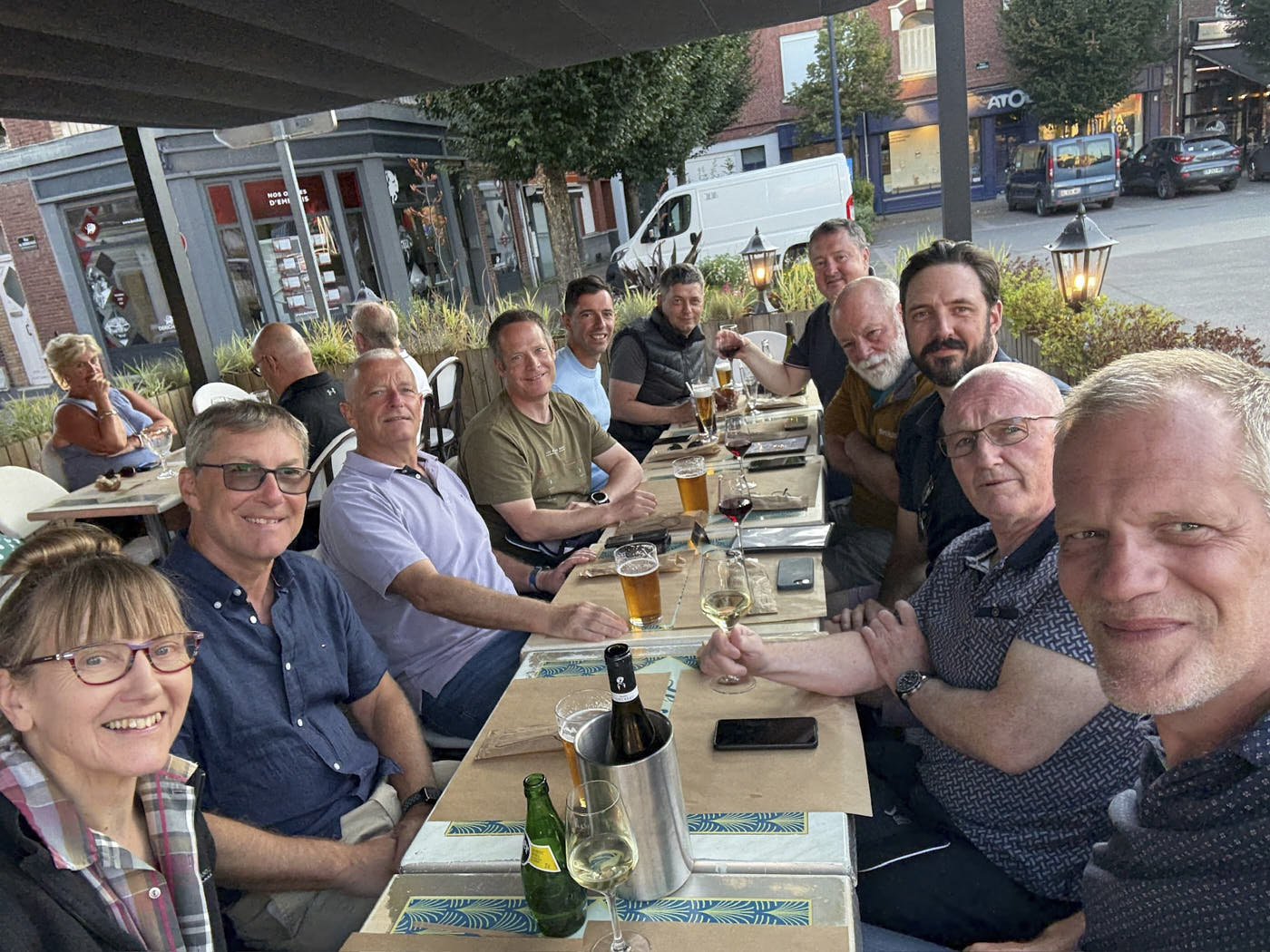
The next day we flew to Lübeck for the lunchtime stop and then on to Strausberg, which is just to the east of Berlin. A gusty arrival followed by a very warm welcome from the airfield manager which included a complimentary cold beer/soft drink for all and free Airfield branded baseball caps. As it was getting late, we opted for dinner at the airfield, which was excellent, followed by a short walk to our respective Hotels.
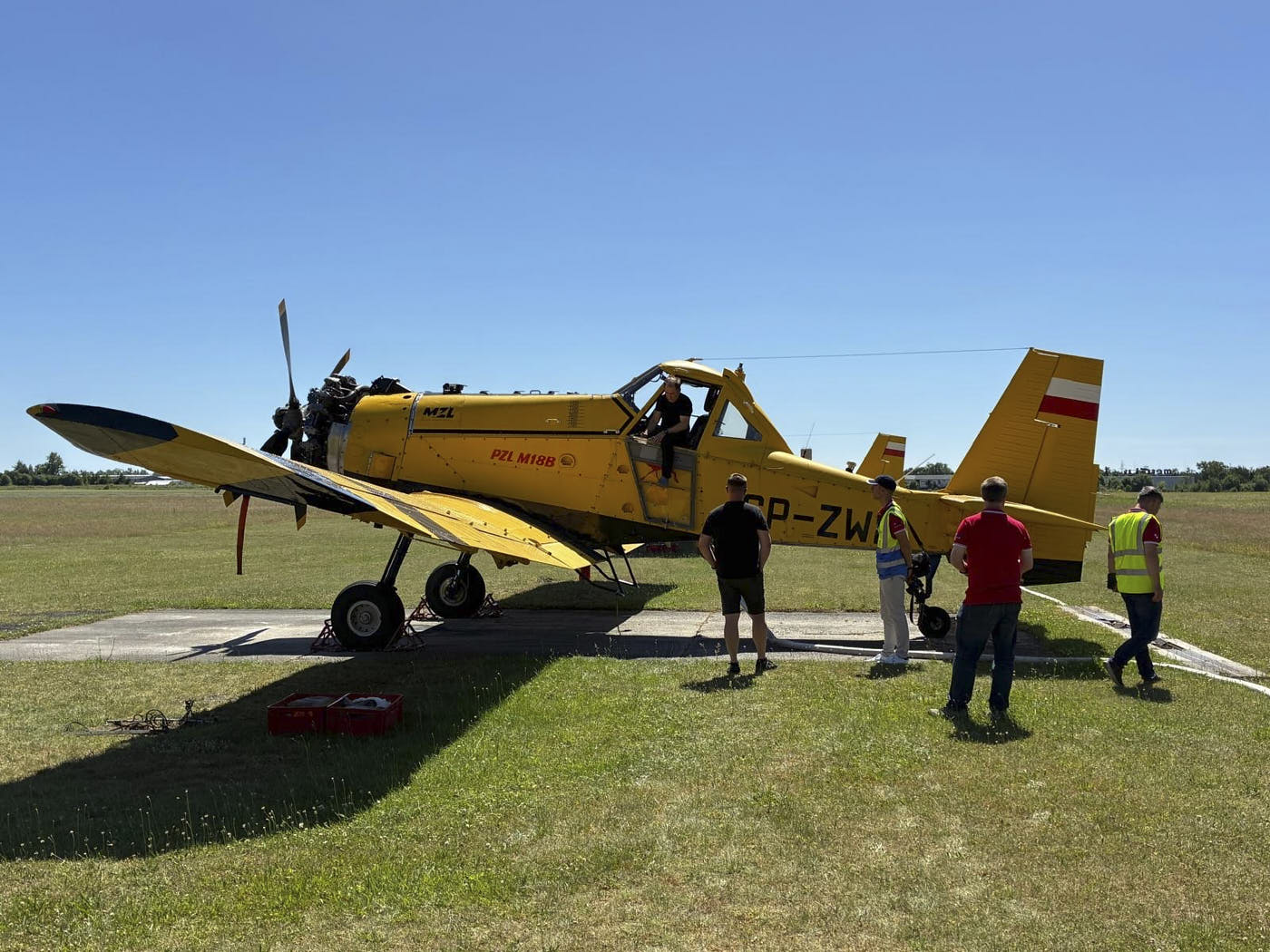
Monday brought our objective for the week. Flying in Poland. We departed Strausberg and headed southeast across the Polish border to a small GA airfield at Lubin. The main users were the local fire fighters who had a pair of bright yellow PZL M-18 Water Bombers which they were only too keen to talk about and show us around, including sitting in the cockpit. After a delivered packed lunch, organised through a local friend of Artem’s, we were off to Letňany, Prague for a bit of sightseeing and a day off from flying.
Two nights and a full day’s sightseeing in the beautiful city of Prague in summer heat, which included a tour on the ‘Beer Bus’ (It does what it says on the tin!) and an afternoon spent at the impressive Kbely Aviation Museum, close to Letňany airfield where we had landed the day before. That evening we were treated to a medieval themed dinner complete with Belly Dancers, sword fights and fire eaters.
So back to the take-off performance problem at Letňany. It was becoming obvious that continuing to ‘nickel and dime’ this particular issue wasn’t going to solve it, and as they say in aviation “where there is doubt, there is no doubt”. As with all our flying legs we had set an alternate airfield, to be used if there was an issue at the target destination. For Letňany we had selected Vodochody a large airfield owned and used by the same named aircraft manufacturer. We phoned them and they agreed that we could bring the PA28’s in solo, and that co-pilots and bags could take the short 20 minute trip to meet us there. We could then continue our leg to Bamberg in southern Germany. This all went to plan and worked well. The eye watering £76 landing fee well worth the peace of mind and avoidance of the hedge at the end of the Letňany runway!
More drama en-route to Bamberg, where after about an hour into the flight we heard this chilling radio call to Langan Information. “G-FOTN, MAYDAY, MAYDAY, MAYDAY – rough running engine”. We listened in stunned silence as Manners calmly requested vectors to a suitable diversion airfield which turned out to be Grafenwoehr, a US Army base a few miles south of his track. The German controller handled the situation clearly and calmly, with Tango November cleared direct into the normally restricted Grafenwoehr airfield any which way and with the airfield ops aware and on full alert. Artem and Deacon attempted to stay on station in the Tecnam but were thwarted by the restricted area covering the airfield and a large chunk of airspace to the West. The rest of us continued to Bamberg still shocked and praying for a safe outcome for Manners and the RV-7.
On arrival at Bamberg there was more trouble. The Cirrus was parked outside the hanger with Graham and Paul lying underneath the wing dealing with a flat tyre. Luckily, they carried a spare and managed to borrow some tools from a local engineer, but the task wasn’t made easy by the airfield and in particular the Tarmac being blistering hot. In the end it turned out to be a flat, caused by something rubbing on the valve which was easily rectified, but still required the wing to be jacked up and the wheel spats to be removed for inspection.
We heard from Manners that he had landed safely at Grafenwoehr and plans were made to recover him from a nearby airfield in the Cessna 182, once temporary safe storage of the stricken RV-7 had been organised.
The rest of the fleet continued to our pen-ultimate night stop at Koblenz, where the Moselle river meets the Rhine. The 182 arrived later with its extra passenger in the rear, just as the forecast storms arrived and a gale started to blow across the airfield, creating a turbulent approach and prompting a sensible go-around. At this point Manners was wondering who had it in for him! Following another excellent meal at the airfield located Greek restaurant and a few commiseratory beers with Manners we retired to the IBIS hotel in the centre of town.
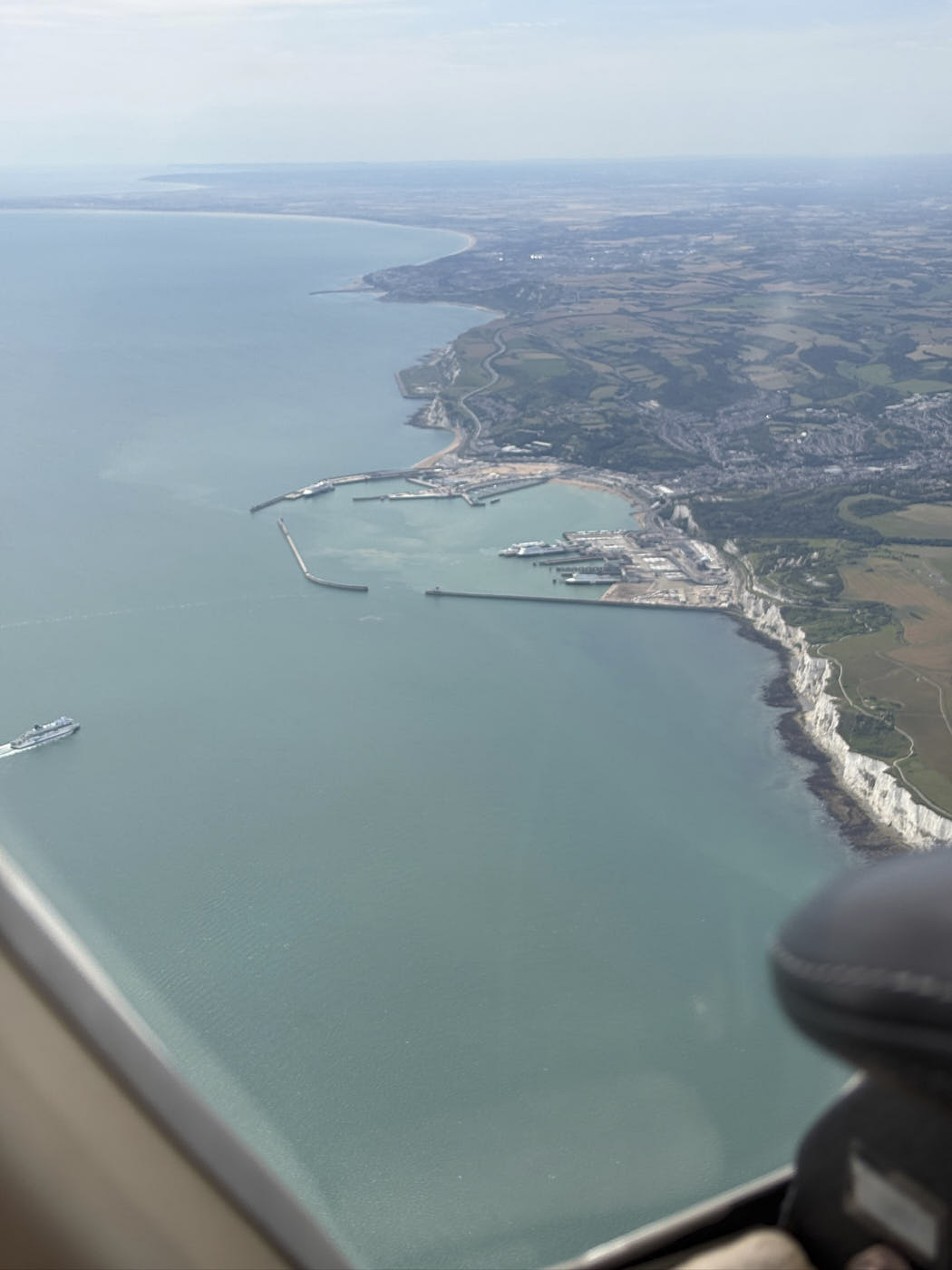
The next day we only had a single leg of a couple of hours to Albert Bray airfield in Normandy, France where we would stay overnight and make use of the customs clearance facilities the next day. This was another flight which on the charts looked to have challenging airspace through Luxembourg and Belgium but which on the day posed no problems, and with glorious weather allowing us to enjoy the spectacular views of the Moselle River valley as we followed it down from Koblenz to Trier.
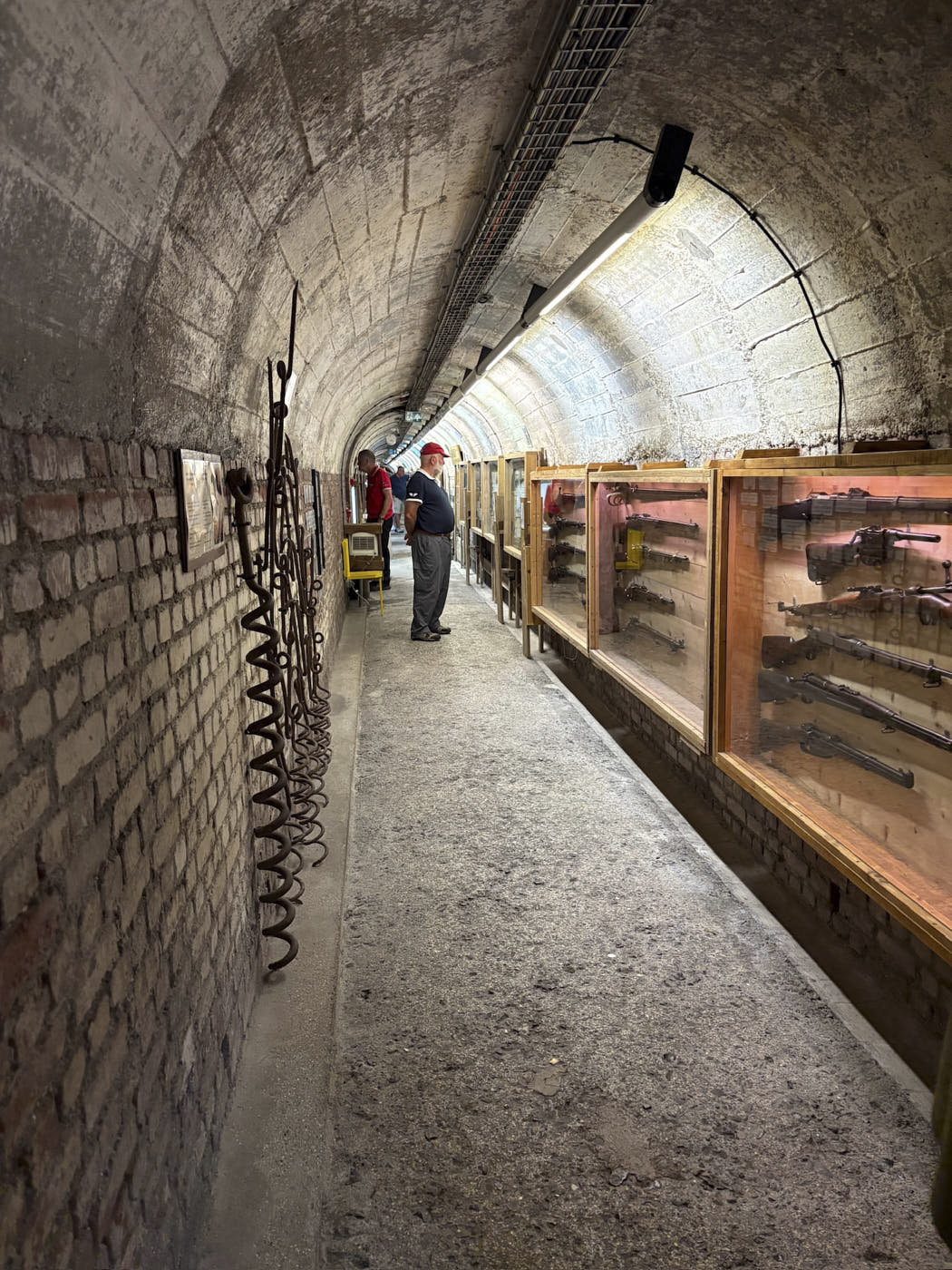
In the morning most of us walked into to Albert town to visit the Musée Somme 1916 https://www.musee-somme-1916.eu/en/ a well put together exhibition of artefacts and several dioramas presented 10m underground in a 250m long cave documenting the First World War and the battle of the Somme specifically, one of the bloodiest battles in modern history.
The last day of the Exped presented good weather for our single cross channel return leg from Albert Bray to Halton. After preparing the aircraft for the flight we assembled wearing our Exped Polo shirts for the traditional team photo. Just before departure we had one last treat as we witnessed the arrival of a huge Airbus A330 Super Guppy ferrying parts from Nantes to the Airbus factory at Albert Bray.
At this point we mostly said our goodbyes as several aircraft departed back to their home bases, reflecting on yet another brilliant HAC Exped. As was once said “The trip of a lifetime, that happens every year!”
PostScript. Manners managed to recover the RV-7, whose engine issue was caused by a cracked spark plug adapter, by the end of the following week, taking a similar route from Bamberg back to Halton via a customs clearance stop at Albert Bray, albeit in literally an afternoon!
Some photos of this years trip can be found here :-
Planning for next years Exped will begin in a matter of months!